

Cao Guoxiong: Suggestions on increasing innovation investment intensity to promote the development of the biopharmaceutical industry
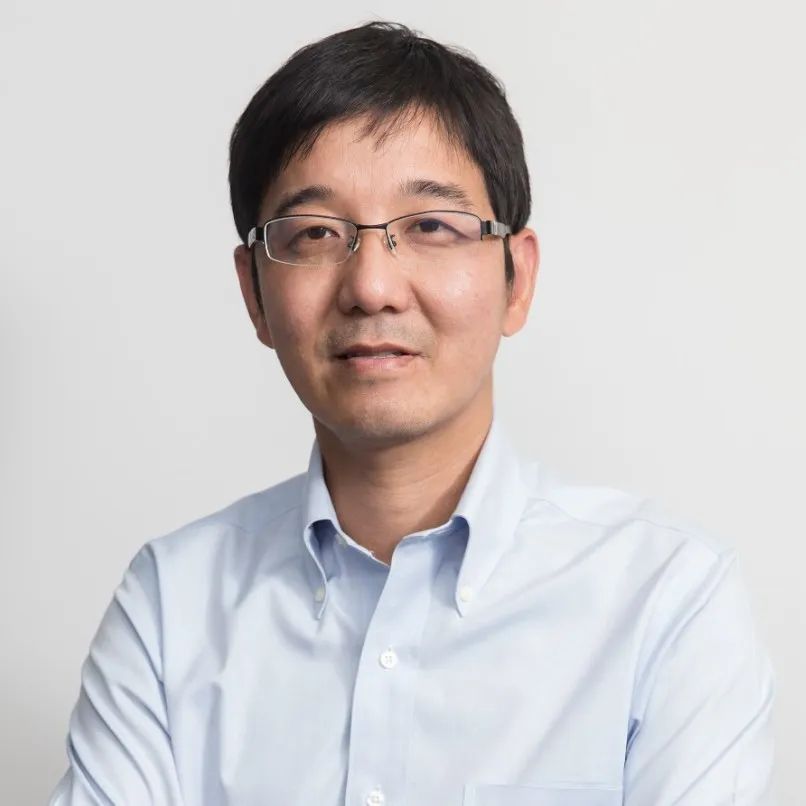
On March 24th, the first meeting of the 12th Hangzhou Municipal Committee of the Chinese People's Political Consultative Conference was held. as Cao Guoxiong, member of the Hangzhou Municipal Political Consultative Conference, Vice Chairman of the Provincial Knowledge Association, Executive Chairman of the Provincial Internet Association, and Chairman of Puhua Group I have diligently fulfilled my duties and prepared three suggestions through joint and individual proposals. Let's take a look at his personal proposal "Suggestions on Increasing Innovation Investment Intensity to Promote the Development of the Biomedical Industry":
As of the end of 2021, there are a total of 40 biopharmaceutical listed companies (including those listed on the New Third Board), 3 pharmaceutical industry top 100 companies, and 6 unicorn companies in Hangzhou. 17 of the world's top 20 pharmaceutical companies have landed. In the field of industrial segmentation, chemical drugs have strong basic strength, while biopharmaceuticals are in the initial stage of rapid growth. Medical devices have established certain comparative advantages in segmented fields such as in vitro diagnostics and high-value medical consumables. Faced with the development trend of advanced urban biopharmaceutical industry, Hangzhou's biopharmaceutical industry is in a critical period of either advancing or falling behind. To strive for excellence, multiple measures are needed, among which a very important one is to increase investment in innovation.
One、 The already formed momentum of innovation
In the field of pharmaceuticals, chemical drugs have strong competitive advantages, while biopharmaceuticals have certain explosive potential. In terms of chemical drugs, innovative drugs such as Ecatinib and Ensatinib from Beida Pharmaceutical, and AND017 from Andao Pharmaceutical. In terms of biopharmaceuticals, such as HX009 from Hansi Biotechnology and uterine blood mesenchymal stem cell injection from Shengchuang Precision Medicine; There are also two protected varieties of traditional Chinese medicine, Xuanju Capsules and Qiming Granules, as well as seven major varieties of traditional Chinese medicine; In the field of innovative medical devices, multiple products have filled the gaps in related areas. For example, Qiming Medical's percutaneous interventional prosthetic heart valve system, Guichuangtong Bridge's drug eluting peripheral vascular stent system and drug eluting PTA balloon catheter, Xingyue Biological's silk fibroin membrane excipients, and Unistar's "novel coronavirus (2019 nCoV) nucleic acid detection kit, etc. The above products and technologies are characterized by cutting-edge and progressiveness features, reflecting the innovation momentum of Hangzhou's bio pharmaceutical industry.
Two、 There is a gap in innovation investment
In 2020, the cumulative R&D investment of listed biopharmaceutical companies in Hangzhou reached 3.5 billion yuan, accounting for 3.29% of the total operating revenue, ranking 17th among 36 cities (according to "Huoshi Creation" statistics), only 1/10 of Suzhou City (30.3%). The gap in innovation investment is reflected in the output of innovation achievements. Hangzhou is in the middle and upper reaches of the benchmark cities in terms of the number of approved new drugs, the number of clinical and application applications for new drugs, and the number of approved medical devices. This is reflected in: as of the end of 2021, Hangzhou had a total of 1287 domestically approved drugs, ranking 18th among benchmark cities; In terms of drug research, as of the end of 2021, a total of 935 Class 1 and Class 2 new drug applications in Hangzhou have been accepted by CDE, which is less than 1/4 of Beijing and 1/3 of Shanghai, and lags behind Nanjing and Chengdu. A total of 64 drugs in Hangzhou have passed the generic drug consistency evaluation, ranking only 15th, behind Chengdu, Shijiazhuang, Lianyungang, Nanjing, etc; As of the end of 2021, a total of 25 medical devices in Hangzhou have been included in the national innovation medical device special approval process for Class II and III medical devices, which is significantly lower than Beijing (63), Shanghai (61), and Shenzhen (43), and basically on par with Suzhou (28).
Three、 Increase the intensity of innovation investment
Maintaining and vigorously enhancing the momentum of innovation investment is crucial for the development of Hangzhou's biopharmaceutical industry to strive for excellence. Therefore, the following suggestions are proposed:
1. Make efforts in the industry segmentation field with prominent advantages and keeping up with the forefront. Accelerate the development of innovative chemical drugs, in vitro diagnostics, digital healthcare and other advantageous fields, strengthen the layout of biological drugs such as antibody drugs and new vaccines, high-value consumables, medical imaging, high-end treatment equipment and other medical device fields, and strategically layout cutting-edge technology fields such as cell and gene therapy, neuroscience, synthetic biology, etc.
2. Establish a key product catalog to strongly support projects to achieve early results. Form a high-quality incubation project pool around preclinical and clinical research projects, connect with public service platforms and clinical trial institution resources, and provide precise services from preclinical pharmaceutical evaluation, small and medium-sized trials, clinical trials, and other stages. At the same time, we will improve policy incentives, expand the scope of support for research projects at different stages based on existing policies, increase support for projects entering clinical phases II and III and applying for listing, and promote project transformation and industrialization.
3. Promote collaborative innovation through cooperation platforms, unveiling rankings, and other means. Introduce effective policies to support large enterprises, universities, medical institutions, and venture capital funds specializing in medical industry investment, and jointly build various cooperation platforms that closely integrate industry, academia, research, and investment. Emphasize the introduction of venture capital funds and provide angel capital for incubation projects. Vigorously advocating the implementation of methods such as "unveiling the list and leading the way" and "horse racing system", promoting in-depth cooperation between research institutes and innovative research and development teams, advancing the deep integration of basic research and industrial chain innovation, and promoting the upgrading of industrialization innovation capabilities.
4. Promote listed biopharmaceutical companies to actively engage in mergers and acquisitions of innovative projects. There are already a number of biopharmaceutical listed companies in Hangzhou. It is necessary to advocate that listed companies fully utilize the financing conditions of the capital market, actively acquire innovative projects in addition to increasing internal R&D investment, and attach importance to cooperation with venture capital funds. By complementing industrial capital and venture capital, they can achieve precise acquisition of high-quality innovative projects and take a shortcut to accelerate project industrialization.
This article is translated from: Zhejiang Zhilian
If there is any infringement, please contact us: 0571-88667693